Scaffolding Manufacturer in Mumbai 2026.
Explore different types of construction scaffolding, engineering requirements, and essential safety standards for secure building projects. Learn how to choose a reliable scaffolding manufacturer in Mumbai and protect your site with quality scaffolding safety nets from Salamah Nets.
High-rise developments and rapid infrastructure growth demand rigorous safety and engineering standards. At the core of these projects is construction scaffolding—the temporary framework that supports work crews and materials at elevation. For civil engineers, builders, and project managers, partnering with the right Scaffolding Manufacturer in Mumbai is a critical procurement decision that directly impacts both project timelines and site safety.
This guide explores the engineering requirements of modern scaffolding, vital safety protocols, and how to evaluate suppliers to ensure your construction site operates securely and efficiently.
The Critical Role of Construction Scaffolding.
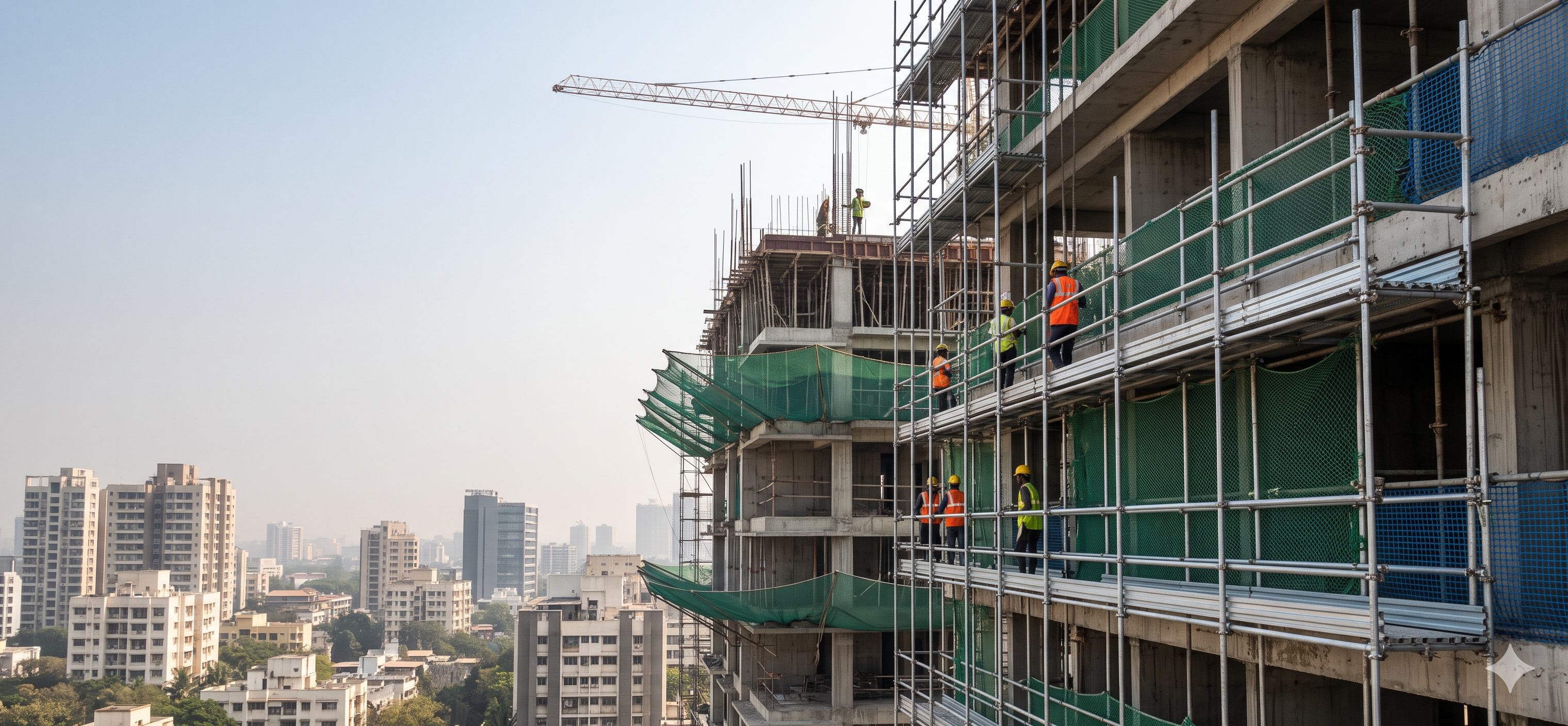
Scaffolding is more than just temporary staging; it is a highly engineered structural support system. It provides workers with stable access to high elevations, ensures efficient material handling, and acts as the primary foundation for high-altitude fall protection systems. Using substandard staging can lead to structural collapse, severe site accidents, and major project delays.
To maintain compliance with local and international safety standards, contractors must prioritize structural integrity by sourcing systems from a verified scaffolding supplier in Mumbai.
Common Types of Scaffolding in Industrial Construction.
Different project phases require specific scaffolding architecture. A knowledgeable manufacturer will typically engineer or supply several variations based on load and access requirements:
- Cuplock Scaffolding
The industry standard for heavy-duty construction. Cuplock systems use a node-point locking mechanism that allows for rapid assembly. They are highly favored for their exceptional load-bearing capacity and platform stability in high-rise concrete and masonry work.
- Tube and Clamp (Tubular) Scaffolding
Offering maximum versatility, this system connects steel tubes with specialized clamps. It is ideal for complex architectural facades or industrial sites with irregular dimensions where standard modular scaffolding cannot be deployed. - Suspended Scaffolding
Commonly used for high-rise window installation, painting, and maintenance, suspended scaffolding hangs from the roof via heavy-duty wire ropes and mechanical winches, providing dynamic vertical access.
Core Engineering & Safety Requirements.
When erecting temporary structures, scaffolding safety relies entirely on the mechanical properties of the materials and the precision of the assembly.
- Material Quality and Load Capacity
Scaffolding must be constructed from high-yield carbon steel or structural-grade aluminum. Project managers must calculate the exact load capacity—accounting for the weight of the workers (live load) and building materials (dead load). Overloading a platform is a primary cause of structural failure.
- Platform Stability and Site Requirements
The foundation is critical. Scaffolding must be erected on stable, leveled ground using heavy-duty base plates and mudsills to distribute the load evenly. For high-rise applications, the staging must be rigorously anchored to the building facade to prevent swaying during high wind conditions. - Inspection Procedures and Worker Safety
Daily inspections are a non-negotiable aspect of site management. A competent safety officer must inspect the scaffolding for:
Corroded or bent tubes.
Missing base plates, guardrails, or toe boards.
Properly tightened couplers and locking pins.
Securely fastened safety netting.
How to Choose the Right Scaffolding Manufacturer in Mumbai.
Procurement managers should evaluate potential partners based on stringent B2B criteria:
- Product Specifications & Material Testing: Ensure the manufacturer uses heavy-gauge steel and provides metallurgical testing reports.
- Safety Documentation: The manufacturer should adhere to IS (Indian Standards) guidelines for construction staging and fall protection.
- Customization and Engineering Support: Complex sites require custom engineering. The right partner will offer technical support for load calculations and site-specific configurations.
- Pricing and Availability: Assess their production capacity. Can they deliver large bulk orders to keep your project on schedule without compromising on structural integrity?
Scaffolding Safety Solutions from Salamah Nets.
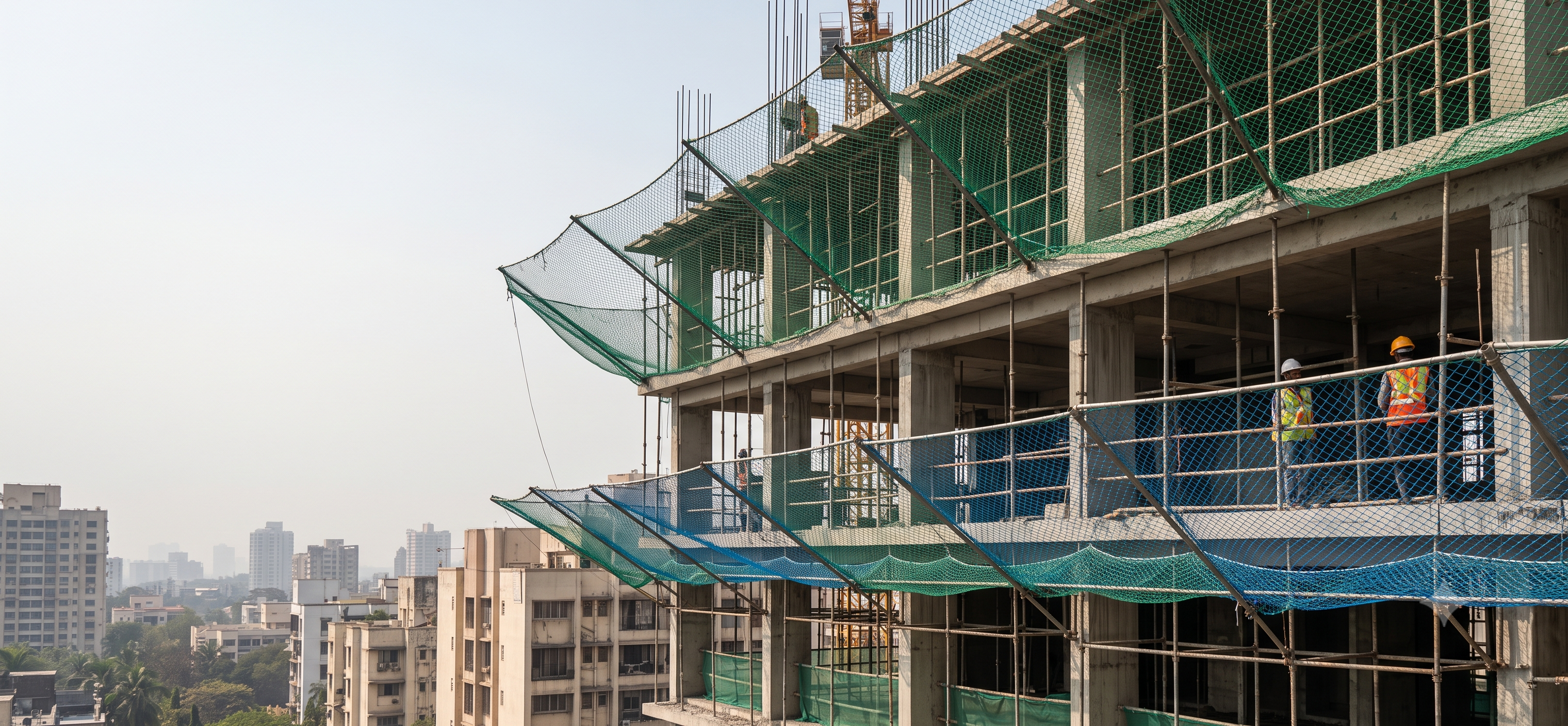
While sourcing the steel framework from a top Scaffolding Manufacturer in Mumbai is step one, securing that framework is step two. Open scaffolding poses a severe risk of falling debris and worker accidents.
This is where Salamah Nets provides the vital finishing layer. As a trusted manufacturer of industrial safety solutions, Salamah Nets supplies heavy-duty, UV-stabilized scaffolding anti-debris nets and green construction mesh. These nets are engineered to wrap tightly around scaffolding structures, preventing tools and masonry from falling while protecting the public and your workforce.
Contact Salamah Nets today to enquire about scaffolding safety nets and construction protection solutions for your project.
Follow Salamah Nets on Instagram for updates on our safety net solutions and construction applications.
Conclusion
Maintaining a secure, incident-free worksite begins with high-quality engineering. By understanding load capacities, enforcing rigorous inspection procedures, and partnering with an authoritative Scaffolding Manufacturer and Supplier in Mumbai, project managers can ensure absolute structural integrity.
To complete your fall protection and debris containment strategy, secure your structures with premium scaffolding nets from Salamah Nets. Prioritize site safety, protect
Frequently Asked Questions (FAQs).
Q1: What is the most important factor when choosing a scaffolding supplier in Mumbai?
A: Material certification and load-testing documentation are the most critical factors. Ensure the supplier provides high-grade structural steel that meets regulatory compliance for your specific site requirements.
Q2: How often should construction scaffolding be inspected?
A: Scaffolding must be inspected by a certified safety officer before its first use, after any severe weather event (heavy rain or high winds), and at least once every seven days during continuous use.
Q3: Why is safety netting required on scaffolding?
A: Safety netting, such as the anti-debris nets provided by Salamah Nets, is mandated to catch falling tools, dust, and materials, protecting workers on lower levels and pedestrians passing below the site.
Q4: What is the difference between standard and heavy-duty scaffolding?
A: Heavy-duty scaffolding utilizes thicker steel tubing and reinforced locking mechanisms designed to support heavy masonry loads and multiple workers, whereas standard scaffolding is typically used for lighter work like painting or plastering.