Agriculture Shade Net Guide 2026.
Explore this complete agriculture shade net guide to understand shade percentages, colours, benefits and uses. Learn how to choose the right UV-stabilized shade net to protect crops and improve farm productivity.
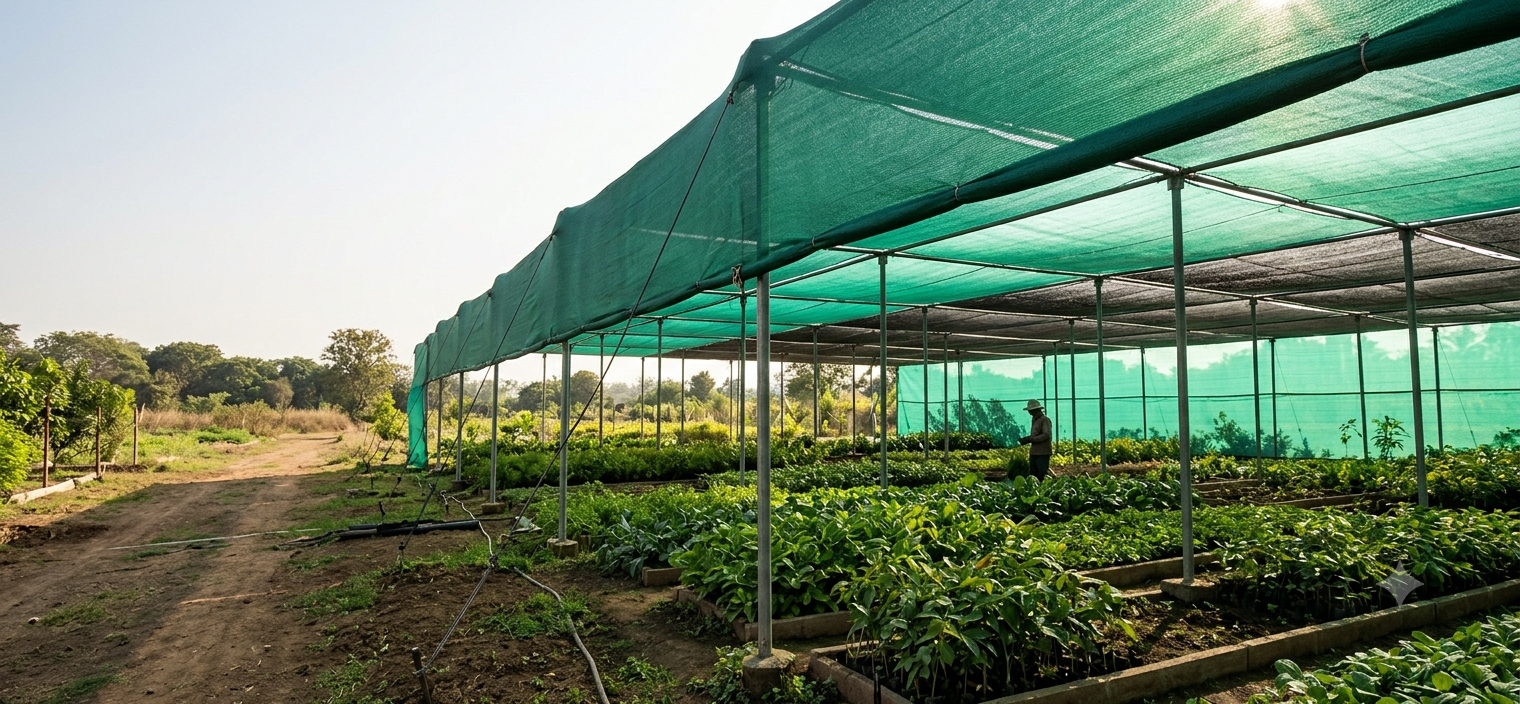
Farming in extreme weather requires a proactive approach to crop protection. Intense sunlight, heavy rain, and strong winds can quickly damage delicate seedlings, dry out soil, and reduce your overall harvest yield. To combat these harsh environmental factors, modern farmers and nursery owners rely heavily on an Agriculture Shade Net.
By creating a controlled microclimate, these nets regulate light, temperature, and moisture, allowing crops to thrive even in challenging conditions. In this comprehensive guide, we will break down the different types of netting, what the shade percentages mean, how colours affect plant growth, and how to choose the right solution for your specific crops.
What is an Agriculture Shade Net?
An Agriculture Shade Net is a woven or knitted fabric made from High-Density Polyethylene (HDPE). It is specifically designed to filter sunlight, reducing the intensity of UV rays that reach the plants below.
High-quality nets are treated with UV stabilizers to ensure they do not rot or become brittle when exposed to constant sunlight. By deploying agricultural netting across greenhouses, open fields, or polyhouses, farmers can actively control the temperature and humidity of their growing environment.
Why Use a Shade Net in Farming?
Using a shade net provides several direct agronomic and financial benefits:
- Sunlight Regulation: It prevents leaf burn by filtering out harsh midday sun.
- Water Conservation: By lowering the temperature beneath the net, evaporation slows down, keeping the soil moist for longer periods and reducing watering costs.
- Weather Protection: It acts as a buffer against heavy rain, hail, and strong winds, preventing physical damage to fragile crops.
- Pest Control: While not a complete barrier, a properly tensioned net helps deter birds, large insects, and bats from destroying the harvest.
Understanding Shade Percentages
Shade nets are classified by their "shade percentage," which dictates exactly how much sunlight is blocked from passing through the mesh. Choosing the right percentage is critical for plant health.
- 30% to 40% Shade Nets
These nets block a minimal amount of light. They are ideal for heat-tolerant plants that still require abundant sunshine but need a slight buffer against extreme summer heat. Common uses include growing peppers, tomatoes, and squash.
- 50% to 60% Shade Nets
This is the industry standard for most general farming and nursery applications. A 50% shade net for plants is perfectly balanced to provide excellent cooling while allowing enough light for photosynthesis. It is widely used for leafy greens, cabbage, spinach, and standard nursery seedlings.
- 75% Shade Nets
These dense nets block a significant amount of light. They are utilized for shade-loving plants such as ferns, orchids, and specific indoor houseplants. They are also heavily used to construct shading areas for livestock and poultry to keep animals cool.
- 90% Shade Nets
A 90% net allows very little light to pass through. It is rarely used for growing crops. Instead, it is used for heavy-duty cooling applications, such as cattle sheds, vehicle parking on farms, and creating privacy barriers around agricultural facilities.
The Importance of Shade Net Colours
The colour of the net does more than just look good; it actively affects how light is filtered and how heat is absorbed or reflected.
- Green Shade Nets: This is the most common colour in agriculture. A green shade net absorbs heat and reflects green light, creating a natural, cooling environment that promotes healthy vegetative growth.
- Black Shade Nets: Black nets absorb maximum heat and block harmful UV radiation effectively. They are heavily used in plant nurseries to create distinct, highly controlled shading zones without altering the light spectrum.
- White Shade Nets: White netting reflects light rather than absorbing it. It provides excellent light diffusion, spreading sunlight evenly across the plants while keeping the greenhouse environment significantly cooler.
How to Choose the Right Agriculture Shade Net
To ensure you get the best return on your investment, follow these steps before purchasing:
- Identify Your Crop's Light Requirements: Shade-loving plants need a 75% net, while fruiting vegetables usually thrive under 30% to 50% nets. Check with an agronomist if you are unsure.
- Verify the Material Quality: Always ask for High-Density Polyethylene (HDPE) that is explicitly UV-stabilized. Untreated plastic will fail after a single summer.
- Consider the Local Climate: If you live in an extremely hot region, a white or green net with a higher percentage may be necessary to combat the peak afternoon heat.
- Plan Your Support Structure: A net is only as strong as its framework. Ensure you have the right poles, wire ropes, and tensioning tools for secure shade net installation.
Source High-Quality Nets from Salamah Nets
When crop yields and livestock safety are on the line, you need materials you can rely on. As a trusted shade net manufacturer, Salamah Nets provides industrial-grade agricultural netting designed to withstand harsh outdoor conditions.
Our UV-stabilized HDPE shade nets are available in various percentages and colours to suit every farming, nursery, and commercial requirement. We ensure strong, uniform weaving that won't fray or tear easily.
Ready to protect your crops and improve your harvest? Contact our team today to discuss your farm's dimensions and find the perfect shading solution:
For the latest agricultural product updates, installation showcases, and farming tips, follow Salamah Nets on Instagram: https://www.instagram.com/salamah.nets/.
Conclusion
Choosing the right Agriculture Shade Net in mumbai is one of the most cost-effective ways to protect your farm against unpredictable weather and extreme heat. By matching the correct shade percentage and colour to your specific crops, you can conserve water, prevent leaf burn, and significantly boost your overall harvest quality. When you source high-quality, UV-stabilized materials from a trusted supplier like Salamah Nets, you are investing in a durable solution that will support your farming operations season after season.
FAQs
- What is the best shade net percentage for growing vegetables?
For most common vegetables like tomatoes, cucumbers, and leafy greens, a 50% shade net is the most effective choice. It strikes the perfect balance by reducing heat stress while allowing enough sunlight for strong vegetative growth and fruiting.
- Does an agriculture shade net protect against heavy rain?
While a shade net is not waterproof, it acts as a highly effective buffer. It breaks heavy raindrops into a fine mist, preventing soil erosion, root exposure, and physical damage to fragile seedlings during monsoon seasons.
- How long does a UV-stabilized shade net last?
A high-quality, UV-stabilized HDPE shade net can last anywhere from 3 to 5 years, and sometimes longer, depending on the intensity of the local sun and the quality of the installation. Proper tensioning prevents wind damage and extends the net's lifespan.
- What is the difference between a green and black shade net?
A green net reflects excess sunlight and blends naturally with the environment, making it great for general crop growth. A black net absorbs more heat and provides a higher degree of UV blockage, which is often preferred for specific nursery operations and structural shading.
- Can I install a shade net over my cattle shed?
.Yes, 75% and 90% shade nets are highly recommended for livestock and poultry. They drastically reduce the temperature inside the shed, lowering heat stress in animals and improving overall farm productivity and animal health.
.png)
.png)
.png)
.png)