.png)
Construction Safety Nets: Types, Uses, Benefits & Installation
Explore this complete guide to construction safety nets, including their types, benefits, uses and installation guidelines. Learn how fall protection and debris netting help prevent accidents, protect workers and improve construction site safety.
Construction sites are high-risk environments. With workers operating at extreme heights and heavy materials being moved overhead, the danger of fatal falls and falling debris is a daily reality. To mitigate these risks, site managers rely on engineered safety systems to protect both their workforce and the public below.
The most reliable, passive fall arrest system available to builders today is the use of Construction Safety Nets. These heavy-duty mesh barriers are designed to catch falling workers, tools, and rubble, preventing catastrophic accidents. In this comprehensive guide, we will explore the different types of netting, their crucial benefits, and the standard installation practices required to maintain a safe, compliant job site.
What Are Construction Safety Nets?
Construction Safety Nets are high-tensile, flexible mesh grids rigged below or around elevated work areas. They are typically manufactured from industrial-grade synthetic materials like braided nylon, polypropylene (PP), or High-Density Polyethylene (HDPE).
Unlike safety harnesses that require active participation from the worker (clipping in and out), a net is a passive safety system. Once it is installed, it provides continuous, round-the-clock protection without restricting the movement or productivity of the construction crew.
Types of Construction Safety Nets and Their Uses
Depending on the specific hazards of your project, you will need to deploy different categories of netting. The two primary types include:
1. Personnel Fall Protection Nets
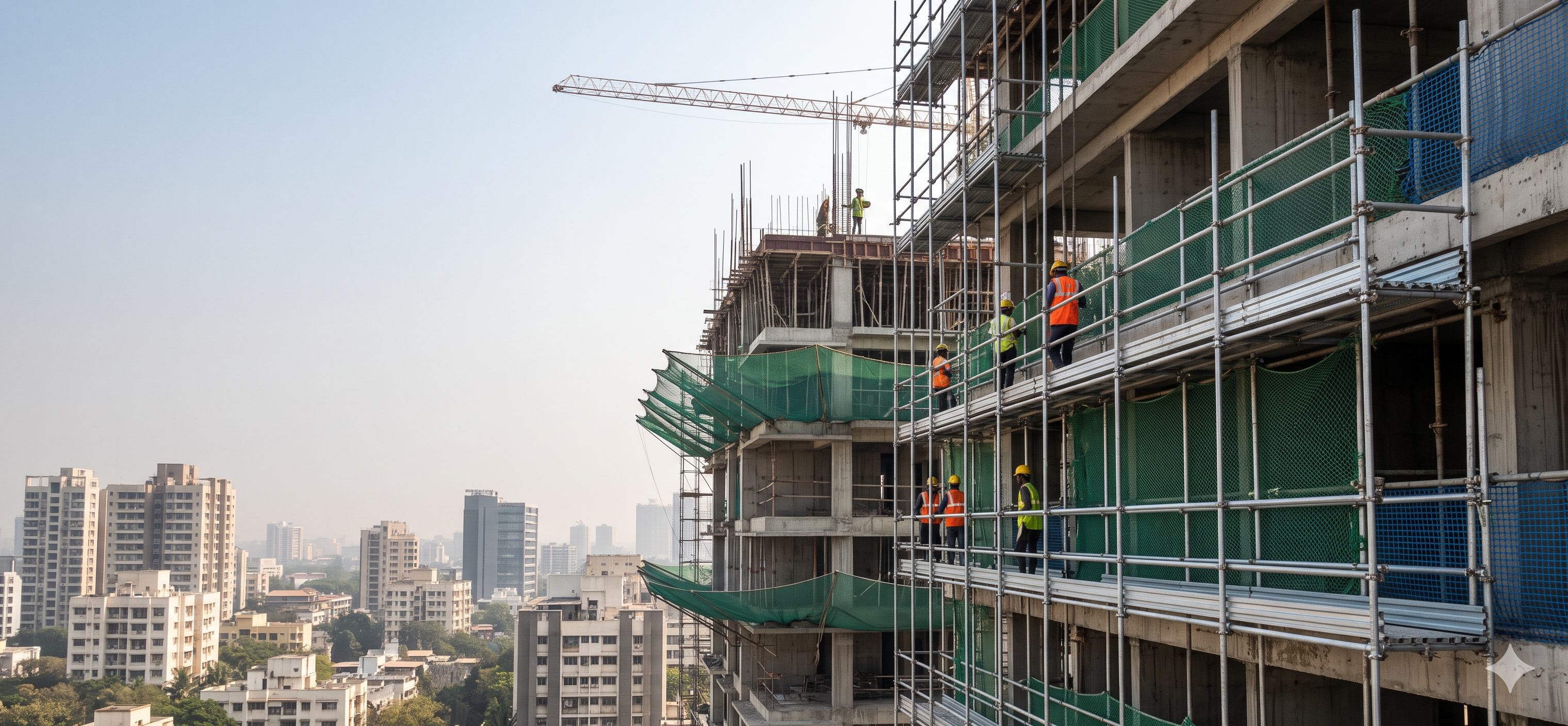
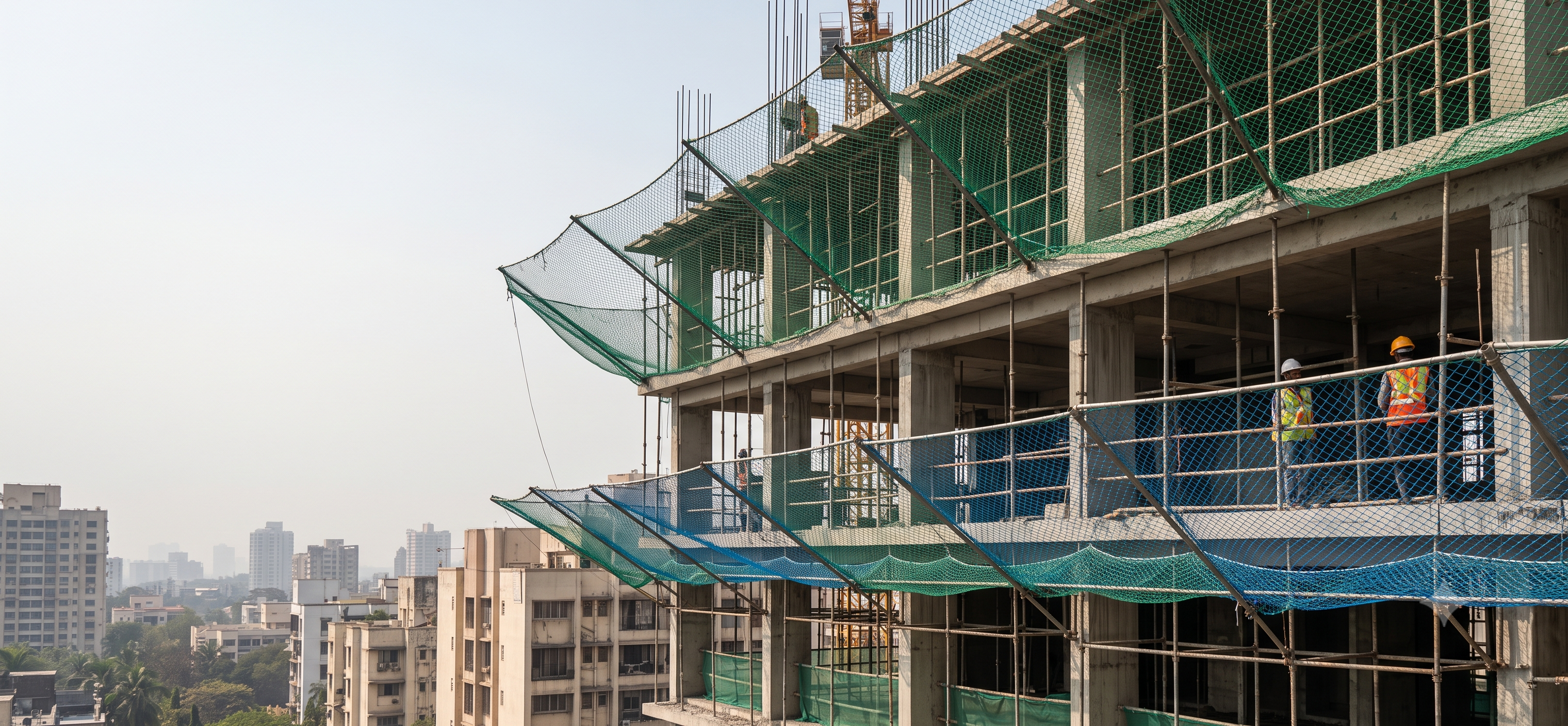
Designed specifically to save human lives, fall protection nets are made from thick, highly elastic ropes (often nylon or PP) that absorb massive kinetic energy. If a worker falls from a scaffold or exposed floor edge, the net stretches to catch them softly, preventing a fatal impact. These nets feature larger mesh squares (typically 100mm) and are deployed horizontally beneath high-altitude work zones, elevator shafts, and bridge constructions.
2. Construction Debris Netting
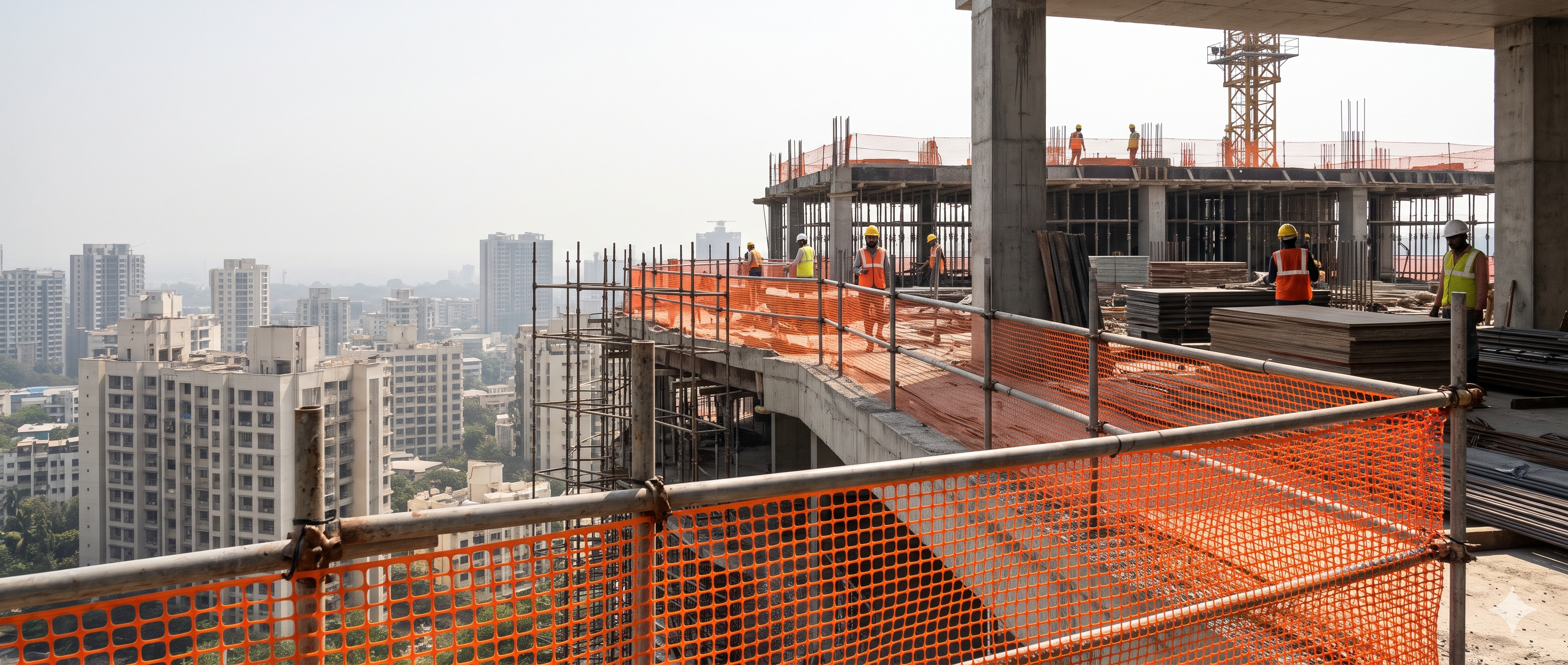
Dropped tools, stray bricks, and concrete chunks pose a lethal threat to anyone walking on the ground level. Construction debris netting features a much tighter, finer mesh (often 10mm to 20mm) designed to catch small objects. These nets are usually wrapped vertically around the exterior of scaffolding or building facades to contain dust, rubble, and equipment within the site perimeter.
Key Benefits of Using Building Safety Nets
Integrating high-quality Construction Safety Nets into your site management plan offers several undeniable advantages:
- Saves Lives and Prevents Injuries: The primary benefit is absolute hazard reduction. A properly tensioned net turns a deadly fall into a survivable incident and stops a falling hammer from becoming a lethal projectile.
- Improves Worker Productivity: When workers feel secure, they move with greater confidence. Knowing that building safety nets are rigged beneath them reduces psychological stress and speeds up high-altitude tasks.
- Legal and Regulatory Compliance: Workplace safety boards mandate strict fall protection protocols. Utilizing proper netting ensures your site passes safety inspections, avoiding massive fines and project shutdowns.
- Public Protection: In dense urban areas like Mumbai, construction often happens right next to busy streets. Nets ensure that pedestrians and neighboring properties are completely shielded from site debris.
Crucial Safety Net Installation Guidelines
Even the strongest net is useless if it is rigged incorrectly. Proper safety net installation requires careful planning and engineering:
- Minimize the Fall Distance: Nets should be installed as close under the working level as possible. Standard safety protocols dictate that the net should never be more than a few meters below the active work zone to minimize fall impact.
- Ensure Proper Clearance: Because the net is designed to stretch and absorb energy, there must be adequate empty space (clearance) beneath the net. If the net is rigged too close to the ground or lower structures, the falling worker could stretch the net enough to strike the obstacle below.
- Use Heavy-Duty Anchors: Construction Safety Nets must be attached to the structural concrete or heavy steel framework using engineered tie-down ropes, forged carabiners, or heavy-duty hooks.
- Daily Inspections: Site managers must inspect the nets daily for frayed ropes, chemical burns, or trapped debris. If a net catches a heavy load, it must be evaluated for structural damage before work continues.
Source Equipment from a Reliable Construction Net Manufacturer.
When human lives are on the line, material quality is not a place to cut corners. Using cheap, untested ropes can lead to disastrous failures under pressure.
As an experienced construction net manufacturer, Salamah Nets produces heavy-duty safety nets engineered specifically for the extreme demands of the building industry. We manufacture UV-stabilized, high-tensile nets that resist weather degradation, cement dust, and friction. Whether you need custom-sized debris containment for a high-rise or impact-absorbing personnel nets, we provide certified solutions that keep your site secure.
Ready to secure your job site and protect your workforce? Contact our team today with your project requirements to source industrial-grade netting:
For the latest industrial product updates, behind-the-scenes manufacturing, and site safety tips, follow Salamah Nets on Instagram: https://www.instagram.com/salamah.nets/.
Conclusion
Managing a secure construction site requires proactive hazard prevention. Construction Safety Nets remain one of the most effective, passive solutions for stopping fatal falls and containing hazardous debris. By understanding the difference between personnel and debris netting, enforcing strict installation protocols, and sourcing your materials directly from a trusted manufacturer like Salamah Nets, you guarantee a compliant, productive, and ultimately safer environment for your entire construction team.
FAQs:
- What materials are Construction Safety Nets made of?
They are primarily made from high-strength synthetic polymers such as braided Nylon, Polypropylene (PP), and High-Density Polyethylene (HDPE). These materials are chosen for their extreme tensile strength, elasticity, and resistance to UV rays and outdoor weather conditions.
- What is the difference between a personnel net and a debris net?
A personnel net is made of thick, shock-absorbing rope with a wide mesh (around 100mm) designed to catch falling workers safely. A debris net uses a fine, tightly woven mesh (often 10mm to 20mm) to catch small falling objects like tools, bolts, and concrete rubble.
- How much weight can a construction fall protection net hold?
Industrial fall protection nets are rigorously tested to hold immense dynamic loads, often capable of catching the equivalent of multiple falling adults simultaneously. However, the exact weight capacity depends on the manufacturer's rating and the strength of the structural anchor points used during installation.
- Can construction safety nets be reused on different projects?
Yes, high-quality Construction Safety Nets can be reused across multiple projects, provided they pass strict safety inspections. They must be checked for UV degradation, frayed ropes, and chemical damage. If a net has successfully caught a falling worker, it is usually recommended to retire it or have it professionally load-tested before reuse.
- Where should construction debris netting be installed?
Debris netting is typically installed vertically on the outside of scaffolding systems, along exposed floor edges of high-rise buildings under construction, and over open elevator shafts to prevent materials from dropping into lower levels.
- Why is clearance below a safety net important?
When a heavy object or person falls into a safety net, the net stretches downward to absorb the kinetic energy. If there is not enough empty clearance space below the net, the person could hit the floor or structure underneath, rendering the net ineffective.
.png)
.png)



.png)