Kids Climbing Net vs Traditional Playground Equipment 2026.
Compare kids climbing nets with traditional playground equipment to understand their safety benefits, materials, indoor and outdoor uses, and custom options for children's play areas.
Children naturally love to climb. It builds physical strength, improves coordination, and boosts their confidence. For decades, parks and backyards have relied on rigid metal frames and wooden jungle gyms to keep kids active. Recently, however, there has been a massive shift toward using a Kids Climbing Net instead of rigid structures.
If you are a parent, a school administrator, or a park developer, your top priority is safety. In this guide, we will compare the safety features of rope-based climbing nets against classic playground structures so you can make the best choice for your play area.
The Risks of Traditional Playground Equipment
When we think of traditional playground equipment, we usually picture metal monkey bars, steel dome climbers, and wooden play structures. While these are durable and classic, they come with built-in safety risks for active children:
- Hard Surfaces: Metal and solid wood have zero give. If a child slips and hits their head or arm against a steel bar, the impact is severe and often leads to bruises or fractures.
- Weather Hazards: Metal structures become dangerously hot under direct sunlight, leading to burns. In the rain, metal bars become highly slippery, increasing the risk of falls.
- Rust and Splinters: Over time, outdoor exposure causes iron to rust and wood to splinter. This requires constant maintenance to prevent cuts and infections.
The Safety Benefits of a Kids Climbing Net
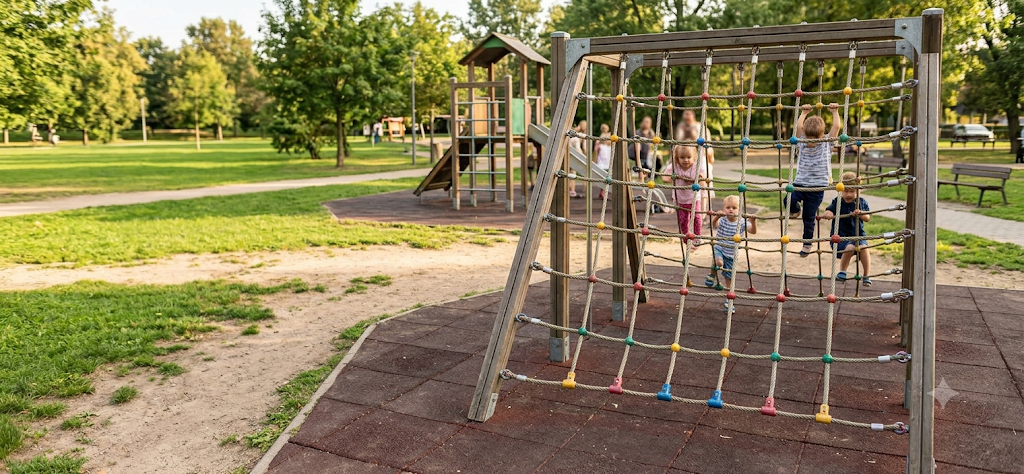
A Kids Climbing Net is fundamentally different because it is made from thick, heavy-duty ropes (like braided polypropylene or polyester) rather than rigid materials. This design offers several unique safety advantages:
- Impact Absorption: The most significant safety benefit of a playground climbing net is its flexibility. The ropes naturally stretch and absorb energy. If a child slips or bumps against the net, they are hitting a soft, forgiving surface instead of solid steel.
- Better Grip: Braided ropes offer a textured surface that is naturally easier for small hands and shoes to grip, even if the weather is slightly damp.
- Temperature Control: Thick synthetic ropes do not absorb and retain extreme heat like metal does, making an outdoor climbing net safe to touch even on hot summer afternoons.
- No Sharp Edges: High-quality nets have heat-sealed knots and smooth edges. There are no exposed bolts, rusty screws, or wooden splinters to worry about.
Head-to-Head Safety Comparison
To make it easy to understand the differences, here is a direct comparison of the two options:
| Safety Feature | Kids Climbing Net | Traditional Playground Equipment |
| Fall Impact | Soft and flexible; absorbs impact naturally. | Hard and rigid; high risk of bruises or fractures on impact. |
| Grip & Slipping | Textured rope provides excellent grip for small hands. | Metal bars can become highly slippery when wet or dusty. |
| Weather Safety | Remains cool in the sun; no rust or rotting. | Metal burns in the sun; wood rots and splinters over time. |
| Movement | Dynamic movement forces kids to focus on balance. | Static and completely rigid. |
Indoor and Outdoor Adaptability
Another major safety factor is the environment. If you are building a playroom or an indoor gym, installing rigid steel structures is difficult and dangerous in confined spaces. Custom indoor climbing nets are highly popular because they can be safely attached to existing walls and ceilings, providing a soft landing zone without requiring bulky metal frames.
Whether used indoors or out, installing a proper kids safety net beneath or around the climbing structure adds an essential second layer of fall protection.
Getting Custom Solutions from Salamah Nets
When dealing with children's safety, the quality of the materials is non-negotiable. You cannot rely on cheap, thin ropes. As an experienced climbing net manufacturer, Salamah Nets provides heavy-duty, tightly knotted climbing nets designed specifically for high-energy play.
Salamah Nets uses premium, UV-stabilized ropes that resist fraying and weather damage. Because every play area is different, they offer custom sizing to ensure your net fits your specific frame or indoor space perfectly, providing maximum tension and safety.
Ready to upgrade your play area? Contact our team today to discuss your dimensions and find the perfect safety solution for your space: https://salamahnets.com/contact-us.
For the latest product updates, creative installation ideas, and tips on building safe play zones, be sure to follow Salamah Nets on Instagram: https://www.instagram.com/salamah.nets/.
Conclusion
When choosing between rigid frames and flexible ropes, the modern approach clearly favors materials that absorb impact rather than resist it. By installing a high-quality Kids Climbing Net, you provide a dynamic, challenging play environment that drastically reduces the risk of serious injuries, ensuring kids can explore their limits safely. For custom sizes and professional-grade materials, reach out to Salamah Nets to design the perfect, secure play area.
FAQs:
- What is the safest climbing equipment for a playground?
Flexible equipment like a kids climbing net is generally considered safer than traditional rigid metal or wood structures. The thick synthetic ropes absorb impact and provide a forgiving surface, drastically reducing the risk of severe bruises and fractures during active play.
- Are rope climbing nets safer than metal monkey bars
Yes, rope climbing nets offer distinct safety advantages over metal monkey bars. Nets provide multiple flexible grip points for small hands, do not become slippery in the rain or dangerously hot in the sun, and eliminate the risk of a child hitting a hard steel pole if they slip.
- What material is best for an outdoor kids climbing net?
The best material for an outdoor climbing net is UV-stabilized polypropylene (PP) or strong polyester rope. These synthetic materials are highly durable, resist moisture and rot, and maintain their load-bearing strength even after prolonged exposure to harsh sunlight and heavy rain.
- How do you secure a climbing net for children?
A playground climbing net must be tightly secured to a sturdy structural metal frame, heavy-duty wooden posts, or reinforced wall anchors. Installers use industrial-grade carabiners, D-rings, or specialized lashing ropes. Proper tension is crucial to ensure the net safely supports a child's weight without sagging dangerously.
- Can a kids climbing net be installed indoors?
Absolutely. Custom indoor climbing nets are highly popular for home playrooms and indoor gyms because they can be safely anchored directly to structural walls and ceilings. This provides a safe, space-saving active play area without requiring bulky metal frames.
- What is the recommended age for playground climbing nets?
Children as young as 3 years old can safely use climbing nets, provided the mesh size (the holes in the net) is small enough to prevent their feet from slipping right through. Taller nets with larger mesh sizes are generally designed for children aged 5 to 12 years.
.png)
.png)
.png)
.png)